Social compliance
- Manufacturing & processing
- Primary production (includes land-based agriculture and aquaculture)
- At-sea operations

Assessing social and environmental programmes against defined benchmark criteria
Through our benchmarking and recognition process
Global supply chains are under increasing pressure to demonstrate supply chain due diligence. However, with hundreds of auditing, monitoring, and certification programmes on the market, each with a different scope, level of rigour, and governance, it is difficult for organisations to know which scheme to use.
By assessing these programmes against defined benchmark criteria, the Sustainable Supply Chain Initiative (SSCI) provides an additional layer of oversight for schemes that seek recognition. This process offers businesses clearer and more comparable information to inform independent sourcing and sustainability decisions, while maintaining diversity of approaches and competitive choice among programmes.
The SSCI Benchmark is open to auditing, monitoring, and certification programmes covering activities in several sectors across both social and environmental sustainability.
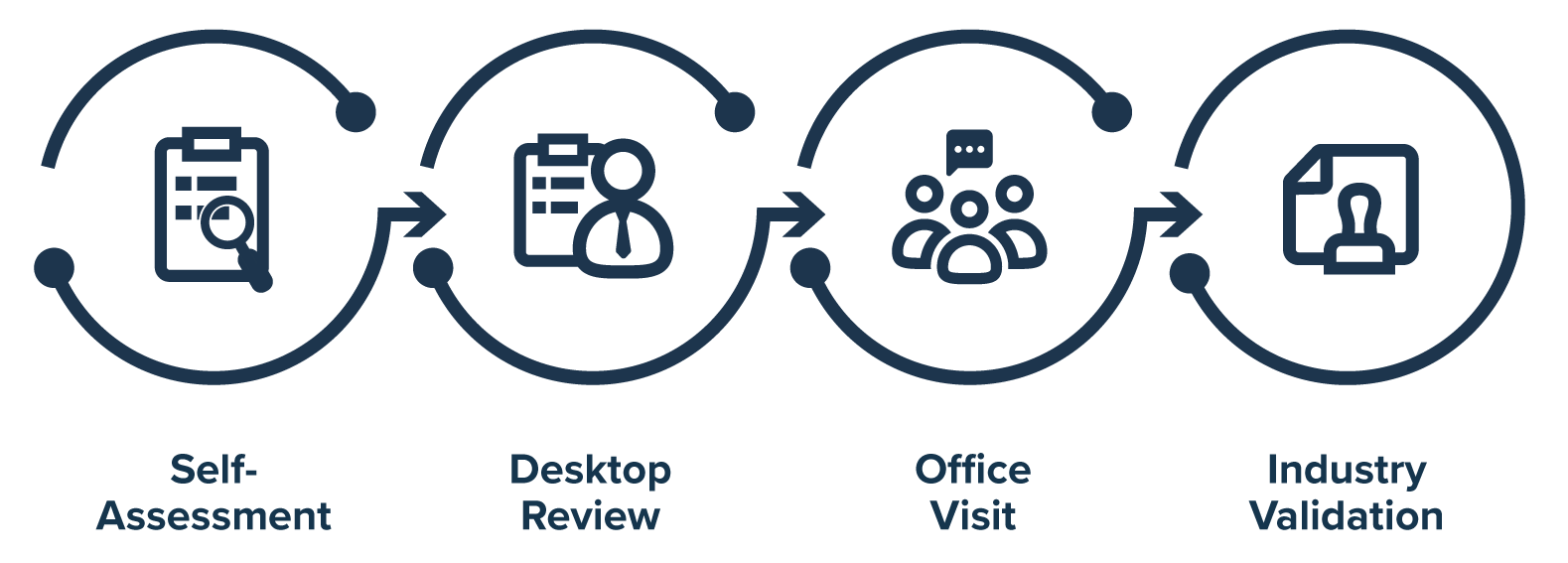
To achieve SSCI Recognition, programmes must undergo benchmarking according to the SSCI methodology. This process starts with an application to the SSCI team and includes a Self-assessment, a Desktop review by an independent SSCI expert Benchmark Leader (BL), an Office visit from the SSCI and the BL coupled with a Public consultation, and a final Industry validation by the SSCI Steering Committee. If all criteria are met, the scheme is recognised by the SSCI.
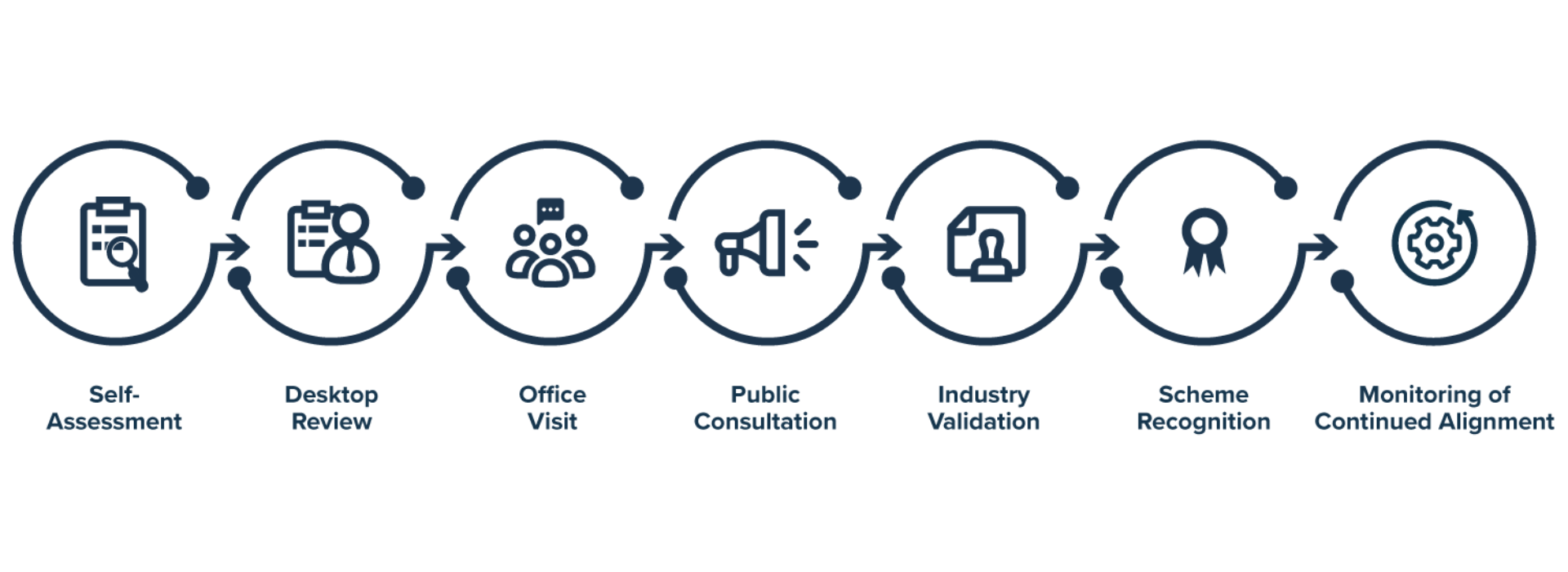
The Benchmark Process ensures continuous alignment through annual assessments of the mandatory SSCI Benchmark Requirements (SSCI Integrity Programme). The monitoring is performed by the independent Benchmark Leader (usually who performed the initial benchmark of the Scheme) under the supervision of the SSCI Manager. The steps of the yearly Monitoring of Continued Alignment process are:
The SSCI criteria have been developed for the industry, by the industry, based on collaborative, multi stakeholder engagement across business, NGOs, academia, and intergovernmental organisations. The Criteria are designed to mature as the sustainability landscape continues to evolve in order to drive continuous improvement in the industry’s approach to sustainability. All SSCI Benchmark applicants are also benchmarked against the SSCI’s scheme management criteria, which include guidance on how schemes should be governed and how audits and certifications be conducted.
Click on each set of criteria to learn more about the key sustainability requirements and relevant governance and verification elements.
The SSCI Scheme Management Criteria Version 1.2 covers elements that ensure auditing schemes operate in a credible manner. They establish the foundational elements of what the industry expects regarding how audits are performed so that they respect social sustainability standards.
The Scheme Management Criteria include the following elements:
The Scheme Management Criteria for all scopes can be found in Part II of the SSCI Benchmarking Requirements. To achieve SSCI Recognition, standards must meet applicable criteria in Part II as well as the respective criteria for their benchmarking scope listed in Part III. Terms used in the Scheme Management Criteria are defined in Part IV of the SSCI Benchmarking Requirements.
The SSCI’s Social Criteria identify the key foundational elements of any effective and responsible social sustainability standard. These criteria ensure that all relevant social sustainability topics are being covered by an auditing scheme. The SSCI Social Criteria are informed by international reference frameworks such as principles from relevant International Labour Organization (ILO) Conventions, the 1998 Declaration on Fundamental Principles and Rights at Work, the UN Guiding Principles on Business and Human Rights, and the CGF Priority Industry Principles on Forced Labour. The Social criteria for all scopes include the following elements:
In addition to the those listed above, the Primary Production scope also includes the following elements:
For the At-Sea Operations scope, the Social Criteria also includes:
To achieve SSCI Recognition, schemes must meet all applicable Social Criteria outlined in Part III for their specific benchmarking scopes, as well as all relevant criteria detailed in Part II of the SSCI Benchmark Criteria. Terms used in the Social Criteria are defined in Part IV – Glossary of the SSCI Benchmarking Requirements.
The SSCI’s Environmental Criteria specifies all the requirements for benchmarking the environmental compliance of a Scheme Owner who seeks recognition. After member and strategic partner development and Public Consultation, the Environmental Benchmark document presents the final requirements applicable to Primary Production, Manufacturing, and Forestry scopes.
The criteria include the following elements:
To achieve SSCI Recognition, schemes must meet all Environmental Benchmark Criteria listed in Part III for their respective benchmarking scopes, and all applicable criteria in Part II (Scheme Management) of the SSCI Benchmark Criteria. Terms used in the Environmental Benchmark Criteria are defined in Part IV – Glossary of the SSCI Benchmarking Requirements.