Reuse models are a key part of the shift from disposable packaging to systems that reduce material use, greenhouse gas emissions and waste, building on approaches already proven at scale, such as in the beverage industry.
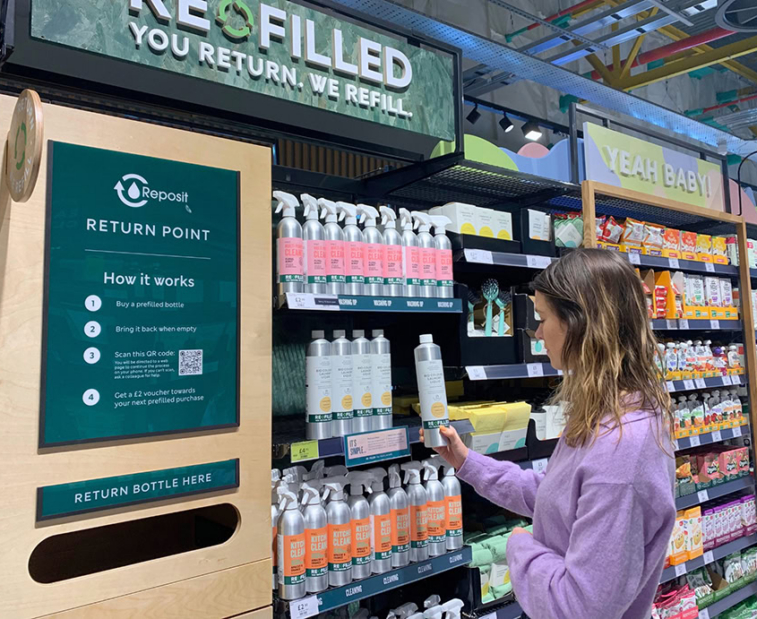
In 2022, the Plastic Waste Coalition launched its Reuse workstream to explore how members can help scale these models. Since then, many members have run pilots to test reuse solutions, and the Coalition is currently exploring opportunities not only in B2C reuse systems, but also B2B reuse pilots. Most recently, the Coalition supported the launch of The Reuse City Canada Project in Ottawa, a city-scale reusable packaging pilot delivered with Reposit and leading retailers and brands. Expected to launch in Q3 2026, the initiative has been designed with scalability in mind and will test how reuse systems can operate at city scale in a way that is practical for consumers, viable for businesses and capable of generating learnings for replication in other markets. The ambition is to use insights from the Ottawa pilot to develop a blueprint that can facilitate duplication of the model elsewhere. Drawing on insights from these pilots and case studies, the workstream is developing proposals on how the Coalition can collectively address key barriers to scale.
Achieving scale and the participation needed for systems change will require collaboration between retailers and manufacturers to offer consumers convenient solutions that provide choice and fit seamlessly into daily life. As a CEO-led platform bringing these groups together, the CGF aims to play a meaningful role in this transition.
Alongside keeping consumer behaviour at the centre of our approach, a key priority is ensuring reuse solutions at scale deliver measurable positive environmental outcomes.
The CGF will continue working closely with the Ellen MacArthur Foundation and other like-minded organisations to ensure alignment, avoid duplication and help accelerate progress. We welcome further discussion and collaboration to support this ambition.